In the world of digital marketing, success doesn’t happen by chance — it follows a strategy. One of the most essential strategies is understanding the marketing funnel, which represents the customer journey from discovering your brand to becoming a loyal buyer. Whether you’re a small business owner, marketer, or content creator, mastering the digital marketing funnel can help you attract, engage, and convert more leads effectively.
📌 What is a Digital Marketing Funnel?
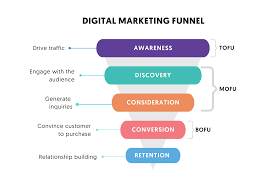
A digital marketing funnel is a visual representation of how potential customers move through different stages before making a purchase. It includes everything from learning about your brand for the first time to finally taking action — like signing up or buying a product.
This narrows at the bottom, symbolizing how not every lead becomes a customer, but the goal is to guide as many as possible down the funnel.
🎯 The 5 Stages of the Funnel
The funnel can be broken into five main stages:
- Awareness
- Interest
- Consideration
- Conversion
- Loyalty/Advocacy
Let’s explore each stage in detail:
1. Awareness: “I Know You Exist”
This is the top of the funnel (TOFU) and the first point of contact. At this stage, people are just discovering your brand. They might not know they have a problem yet, or they’re just starting to look for solutions.
Your goal: Grab attention and educate.
Best digital marketing strategies for awareness:
- Social media posts and reels
- SEO blog content
- Influencer shoutouts
- YouTube videos
- Paid ads on platforms like Facebook or Google
✅ Tip: Focus on creating high-quality, shareable content that solves common problems your target audience faces.
2. Interest: “Tell Me More”
Now that your audience is aware of your brand, it’s time to spark interest. They are actively looking for more information and comparing solutions.
Your goal: Show your value and build trust.
Effective tools:
- Email newsletters
- Lead magnets (eBooks, free checklists)
- Webinars or free workshops
- Informative blog posts and how-tos
✅ Tip: Use storytelling and highlight how your product or service can help improve their lives.
3. Consideration: “Why Should I Choose You?”
At this middle-of-the-funnel (MOFU) stage, leads are now evaluating different options. They are closer to a decision and want solid reasons to choose you over competitors.
Your goal: Provide proof and make the decision easier.
Best content for this stage:
- Case studies and success stories
- Product comparisons
- Customer reviews and testimonials
- Detailed service pages
✅ Tip: Retargeting ads work great here. Show your product again to those who visited your website but didn’t convert.
4. Conversion: “I’m Ready to Buy”
This is the bottom of the funnel (BOFU) — where the magic happens. The prospect is now a hot lead and just needs a little push to become a paying customer.
Your goal: Make it easy and irresistible to buy.
Tactics to increase conversions:
- Limited-time offers
- Free trials or demos
- Strong CTAs (Call to Action)
- Simplified checkout process
- Personalized email follow-ups
✅ Tip: Ensure your website or landing page is optimized for mobile and fast loading to avoid drop-offs.
5. Loyalty & Advocacy: “I’ll Tell My Friends”
After conversion, many brands forget this critical phase. Loyal customers are the most valuable — they buy again and become brand advocates.
Your goal: Retain and delight.
Tactics for this stage:
- Loyalty programs
- Personalized thank-you emails
- Asking for feedback or reviews
- Exclusive offers for returning customers
- Referral campaigns
✅ Tip: A happy customer can bring in more leads through word-of-mouth than a paid ad.
📊 Why the Funnel Matters in Digital Marketing
Understanding your digital marketing funnel helps you:
- Craft better content for each stage
- Personalize your messaging
- Allocate your marketing budget wisely
- Improve customer experience
- Increase conversion rates and brand loyalty
🚀 Optimizing Your Funnel for Success
Here are a few bonus tips to make your funnel more effective:
- Use analytics – Tools like Google Analytics or Meta Ads Manager can track which funnel stage your audience drops off.
- A/B Test – Try different headlines, CTAs, visuals, and emails to see what performs best.
- Automate smartly – Use CRM tools and email automation to stay connected with leads.
- Focus on content – Great content is the glue that holds the funnel together.
- Keep improving – The funnel is not static. Always optimize based on performance data.
💡 Final Thoughts
The digital marketing funnel is more than a theory — it’s a powerful roadmap to help you move cold audiences to loyal customers. By understanding each stage and using the right strategies, you not only boost conversions but also build long-term brand loyalty.
Remember: People don’t buy from brands. They buy from brands they trust. Your funnel is your chance to earn that trust, step by step.